Wrongful Convictions Still Matter in a World on Fire
The physical, mental, and economic traumas at the core of my investigation can make us all vulnerable


Three years ago I was a struggling freelance journalist, trying to figure out my place in an increasingly uncertain media landscape. Mass layoffs had worsened competition among writers for reader attention, and I had neither the audience nor the street cred I needed to make it among the amazing work being done by the likes of 404 Media, Kat Tenbarge, or Taylor Lorenz among many others.
When I first learned of Erica Johnson's wrongful conviction claim via Slack, I noticed no mention of cell phone evidence. For a case from 2011, that seemed odd to me. Then I thought, "Someone else will pick this up," and, "I don't have the chops to investigate it anyway."
But no one else did, and I was still really curious. I reached out.
I spent about eight months investigating Erica's claim. Currently incarcerated on a life sentence for attempted murder, Erica talked with me multiple times via phone and the GettingOut app. I parsed the police reports and trial transcripts she sent me, learned how to file California Public Records Act (CPRA) requests, and interviewed an expert on traumatic brain injuries. A colleague, Ben Camacho, obtained the trial exhibits I needed from the Los Angeles Superior Court to assess the state's case against Erica.
In the nearly two and a half years since I wrote the story, it's been partially published, unpublished due to a labor dispute, and accepted but then unaccepted as ICE raids, the protests against them, and other, more immediate concerns took shape following the 2025 inauguration.
But it was a story, Ben and I both felt, that still deserved to be told. The case unfolded in ways that underpin some of what we're currently seeing on the national stage, including what Rolling Stone's Jack Crosbie called "no real burden of proof" to back up authorities' claims about suspects.
My story was finally published, at long last, in two parts on Ben's Substack, Inadvertent. You can read Part 1 here and Part 2 here. Please be sure to subscribe for more on holding Los Angeles power to account.
As frustrating as this timing has been, in many ways it offered a chance to reflect not only on a single wrongful conviction, but also at the broader social forces that made it possible – and what they might mean for emergency management.
Exploiting vulnerabilities to construct a case narrative
As the investigation moved forward, I found I had two fairly specific sets of knowledge that formed the basis for the questions I was asking. For 10 years I had worked in the digital forensics industry, writing technical marketing content about the kind of cell phone and other digital evidence I didn't see mentioned in any of Erica's documentation.
Towards the end of that part of my career, I contracted with a child advocacy nonprofit. I worked with subject matter experts to write and edit educational resources, including articles about forensic interviewing of children and other vulnerable people.
That got me wondering why forensic interview protocols didn't appear to have been the foundation for statements made by the victim of the attempted murder, Mario Carr. Designed to prevent the contamination of victims' memories, forensic interviewing relies on open-ended questions and episodic memory retrieval to help victims recount their trauma.
Mario Carr didn't only have a traumatic brain injury from being shot. He also reportedly had been diagnosed with schizophrenia. Likewise his mother, who had spoken to him about the shooting before detectives interviewed him.
While schizophrenia is both overdiagnosed and undertreated among Black Americans suffering from mental health challenges, its mere mention should have given police pause. The condition is commonly associated with delusions – false beliefs – but as I wrote in my piece, can also result in confabulation, or false memories.
What appears to have happened instead was that Long Beach gang detectives exploited Mario Carr's trauma. As I found, none of their training seemed to have prepared them to interview such a vulnerable witness.
In fact, deputy district attorney Julian Recana used language in his closing argument that seemed to indicate a belief that communication, not various forms of brain function, was Carr's only deficit.
The clear vulnerabilities that keep people in survival mode
To be very clear, as Barbara Bradley Hagerty wrote recently for The Atlantic, not only the wrongfully convicted, but also the victim's family, are victims of justice system failures. The notes from the emergency room caseworker on the night Mario Carr was shot indicate a family already in turmoil:
"Received call from Det Goodman... who stated [patient]’s mother & father are both homeless with "major mental deficiencies," the notes read. "Per [Mario's sister] Jessica, they were all raised by their grandmother... since Lashone has schizophrenia, & the [patient]’s father is 'nowhere to be found.'"... [Zerlene] Haywood confirmed she did raise the 3 kids, but stated that her husband died a year ago.... Jessica stated that [patient] has ADHD & schizophrenia, & receives [Supplemental Security Income]."
But Erica Johnson was also vulnerable. As I wrote in Part 1:
In the years following the Great Recession, she’d found it hard to make ends meet. Eventually, in 2008, Johnson would be criminally charged with petty fraud and prostitution — the latter count due to an undercover vice officer.
Nonetheless, her cousin’s wife helped Johnson get what she characterized as an under-the-table job designing catalogs and handling invoicing and billing for a local company. However, Johnson was let go after about eight months, also owing to the recession. After moving to Long Beach in 2011, she earned a meager living doing hair.
In short, both Johnson and the Carrs were already living precariously. That most of us are now, 15 years later, one paycheck or less away from catastrophe should have us all rethinking our relationships to the justice and other systems we encounter.
In other words, our "main character syndrome" and, perhaps, conditioning via media have us believing the system will work in our favor. We don't realize that as impersonal as it is, the system frequently merely self-sustains.
The National Registry of Exonerations demonstrates this. It's been tracking cleared cases – so far, 3,855 of them – since 1989. Reading the details is always nightmarish because they highlight how easy it is to get swept away on a rip current of false and untrustworthy memories, cognitive biases, bad-faith lies, and shifting narratives, as this poignant op-ed in response to a recent Pennsylvania Supreme Court decision points out.
Vulnerability makes us more alike than different
A thing I've been struck by in my civil service role is how people tend to assume everyone functions at the same cognitive level. We tend to assume people make decisions and then act based on rationales similar to our own, never accounting for the hundreds of variables that go into both decision-making and action-taking.
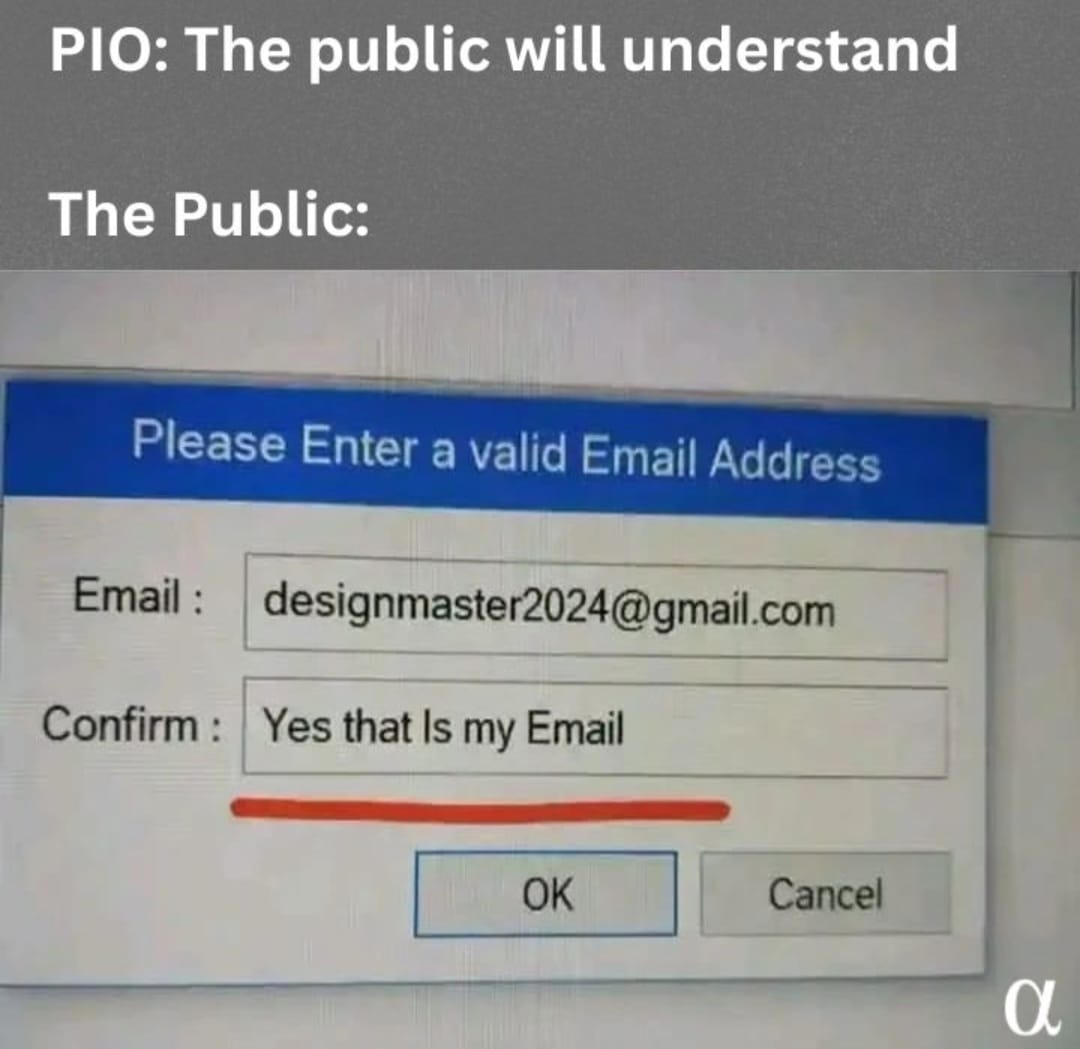
When faced with decisions and actions that are different from our own – from those we assume or would like to believe we would take – we judge others as "stupid" or "lazy" or "entitled" or "lacking common sense" or self-awareness or whatever lack in ourselves someone else's mistake reflects.
I believe it's in good faith that most of us want to assume others share our sense of empathy, our priorities, our values; our sense of justice, fairness, rightness. It can be a rude awakening when we learn other people do not, in fact, think or feel the same way we do; sometimes quite the opposite. This awakening can be so rude that sometimes, we would rather pretend such people don't exist.
It's in this vacuum that police build their careers. Over time, seeing people on the worst days of their lives, many police learn to assume the worst of just about everyone except, perhaps, people who look and act like they do – or who, at least, support their narratives.
This consideration is important in the context of emergency management, where disasters of various stripes render everyone in a given location vulnerable to varying degrees.
Under the National Response Framework, "Public Safety & Security" is enshrined under Emergency Support Function (ESF) #13. Coordinated at the federal level by the Bureau of Alcohol, Tobacco, Firearms and Explosives – an agency under the U.S. Department of Justice – ESF-13 is intended to provide assistance to overwhelmed local, state, tribal, territorial, and insular area governments.
Yet emergency management is not part of police officers' everyday responsibilities. And so, just as police responding to a mental illness crisis can end up escalating and complicating the situation by ascribing the worst possible motive to a patient, police responding to disaster without awareness, training, or empathy for vulnerable people will likely make things worse.
It's not as simple as insisting that people need to "just comply." Crisis intervention teams exist because people experiencing crisis are often too overwhelmed and afraid to understand what's happening, why those lights are flashing and people are yelling at them – much less what they need to do.
Thus I want everyone to read Erica Johnson's story, and I want everyone who reads it to consider our own vulnerabilities: not just the ones we have now, but also the ones we think are unforeseeable; the visible and invisible ones, the ones that affect us more or less depending on the day, the ones we're glad we don't have and the ones that affect our neighbors, because indirectly, those vulnerabilities affect us, too.
Consider these vulnerabilities, and then work towards a world that dignifies and supports them.